
TL;DR
AI-generated seller portraits work best when they look credible, consistent, and human, not overly polished. Ecommerce sellers should match the photo style to the sales channel, keep brand colors consistent, and refresh profile images alongside storefront, ad, and social assets.
A shopper often sees a seller's face before reading a product description, especially on Etsy, Shopify, TikTok Shop, Instagram, Facebook Marketplace, and consultant-led storefronts. An AI profile photo for ecommerce sellers helps turn that tiny trust signal into a clear brand asset, particularly when paired with product visuals, bios, and social content. Looktara gives sellers a practical way to create polished profile imagery without planning a full studio shoot, while related assets such as a Shopify resume headshot generator can support founder pages, marketplace profiles, and professional bios.
Table of Contents
What is an AI profile photo for ecommerce sellers?
An AI profile photo for ecommerce sellers is a generated or enhanced portrait used to represent a seller, founder, maker, consultant, or boutique brand owner across online selling channels. It should make the person behind the store look credible, approachable, and consistent with the brand's product category.
E-commerce: Commercial activity involving the online buying or selling of products and services through internet platforms.
Profile images differ from product photos because they sell confidence, not only merchandise. Competitor SERP results for AI ecommerce imagery often focus on product photo generators such as Flair.ai and SellerPic, yet seller identity is a separate trust layer.
Key insight: Product photos explain what is being sold; seller photos help explain who stands behind it.
Seller profile photos compared with product photos
Seller imagery and product imagery should work together, but each has a different job in the buying process.
| Image type | Primary job | Best channels | Common success signal |
|---|---|---|---|
| Seller profile photo | Builds personal trust | Etsy, Shopify About pages, LinkedIn, Instagram bio | The seller looks real, consistent, and reachable |
| Product listing photo | Shows item details | Marketplaces, storefronts, ads | The product looks accurate and desirable |
| Lifestyle image | Creates use context | Pinterest, Instagram, TikTok Shop | The buyer understands the product in real life |
| Founder brand portrait | Adds authority | DTC websites, press kits, consulting pages | The brand feels established and credible |
An AI portrait should not replace honest product representation. Instead, it should create a consistent human presence across store profiles, customer support pages, shipping inserts, and social commerce accounts.
Why seller photos shape ecommerce trust
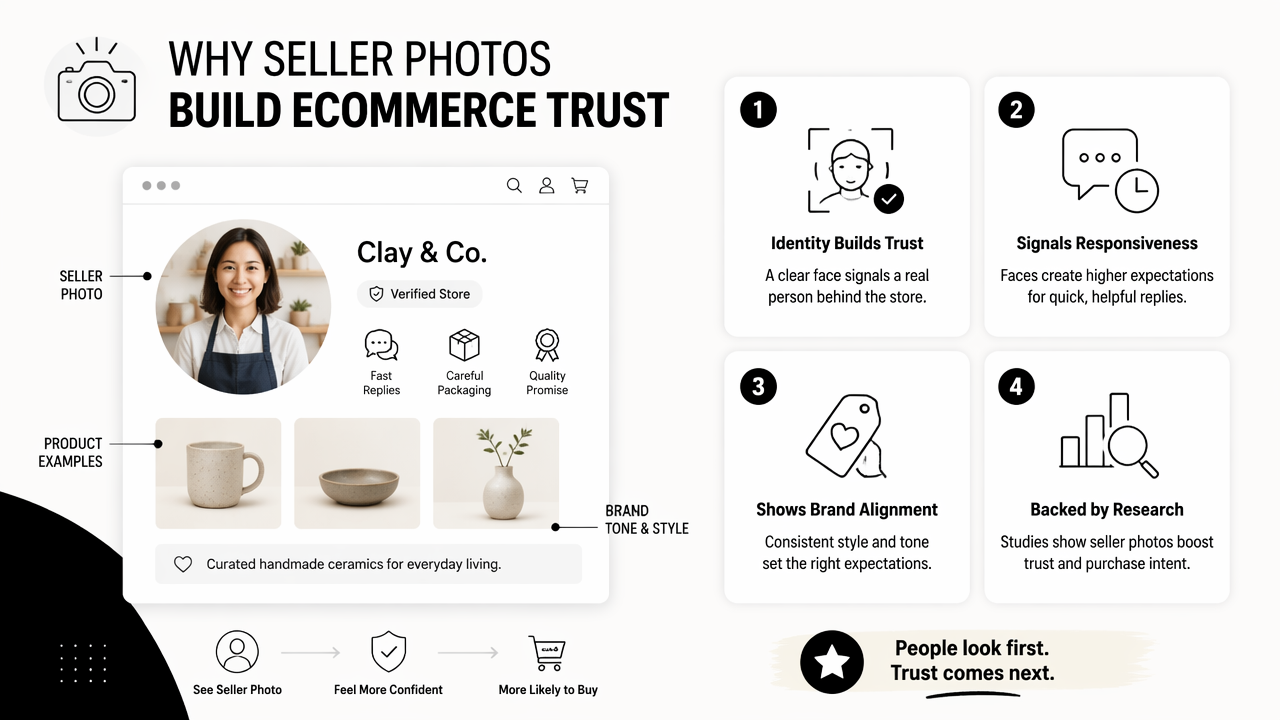
Seller photos shape ecommerce trust because online buyers use identity cues to judge whether a store feels legitimate, responsive, and aligned with the product promise. A clear face, consistent styling, and matching brand tone can reduce uncertainty before a buyer reads reviews or policies.
Academic research supports the broader shift toward AI-assisted digital commerce experiences. A 2022 study on AI-powered technologies and Instagram purchase decisions in fashion and apparel examined how AI tools connect with buying behavior in social channels. Research on consumer behavior in the metaverse also shows how digital environments keep changing the way people evaluate brands.
The practical takeaway is simple: a seller photo should feel like part of the store, not a random avatar. A handmade candle seller, a fitness coach, and a jewelry founder should not use the same portrait style.
Trust is built fastest when the face, product visuals, brand colors, and platform context all tell the same story.
Trust signals a profile photo can support
A strong seller portrait can support several trust signals at once:
- Authenticity: The image looks like a real person connected to the store.
- Professionalism: Lighting, cropping, and clothing match the product price point.
- Consistency: The same visual identity appears across marketplace, storefront, and social profiles.
- Accessibility: The seller appears approachable for questions, returns, or custom orders.
- Brand memory: Colors and mood match the logo, packaging, and content.
For sellers building a full identity system, a portrait works best beside a recognizable mark or shop icon. A tool such as the Shopify logo AI generator can help align the face of the seller with the face of the brand.
Where the photo matters most
Profile photos carry different weight by channel. On marketplaces, the image sits beside ratings, shop age, and reviews. On Shopify, it often appears on an About page, founder story, or customer support block. On social commerce, it becomes part of the sales pitch every time a post, pin, short video, or ad appears.
For content-heavy sellers, portraits should also be cropped for social previews. Pinterest sellers can extend the same visual identity into product discovery assets using a Shopify Pinterest pin AI generator, which keeps the brand recognizable beyond the storefront.
Which profile style fits each seller type?
The best profile style depends on the seller's category, price point, and buyer relationship. Handmade sellers usually need warmth, DTC founders need authority, consultants need expertise, and boutique owners need taste-driven consistency.
A single portrait can work across platforms when the styling is intentional. The mistake is choosing a generic corporate headshot for a brand that sells playful ceramics, handmade soaps, vintage clothing, or creator-led services. Style should match buyer expectations.
Looktara can help sellers create several profile variations for different use cases, such as marketplace trust, founder bios, and social commerce campaigns, while keeping the same recognizable identity.
Recommended portrait styles by seller category
| Seller type | Best visual style | Clothing and background | Where it works best |
|---|---|---|---|
| Handmade seller | Warm, natural, personal | Soft light, craft table, neutral apron, workshop hints | Etsy, Shopify About page, Instagram bio |
| DTC founder | Clean, confident, editorial | Solid colors, brand palette, uncluttered studio background | Shopify, LinkedIn, press pages |
| Consultant seller | Expert, calm, approachable | Smart casual, simple office or neutral backdrop | Service storefronts, LinkedIn, booking pages |
| Boutique owner | Stylish, curated, brand-led | Trend-aware outfit, retail or lifestyle setting | Instagram Shop, TikTok Shop, Facebook |
| Creator or influencer | Expressive, recognizable, platform-native | Branded colors, strong crop, mobile-friendly composition | TikTok, YouTube Shorts, Instagram Reels |
The strongest portrait usually has one clear focal point: the seller's face. Props should support the brand story, not compete with it.
Channel-specific cropping and format tips
A portrait should be prepared in several crops before launch:
- Square crop: Best for marketplace avatars, Shopify profiles, and Instagram.
- Circle-safe crop: Keeps the face centered when platforms mask the image.
- Vertical crop: Useful for founder story pages and mobile-first storefronts.
- Wide crop: Helpful for banners, press kits, and creator profiles.
- Thumbnail crop: Needed for short-form video covers and ad previews.
Short-form sellers should test whether the face remains clear at small sizes. A matching Shopify TikTok cover AI generator can help keep video thumbnails consistent with the seller portrait.
How should sellers create a trustworthy AI profile photo?
Sellers should create a trustworthy AI profile photo by starting with accurate source images, choosing a brand-matched style, generating several variations, checking realism, and testing the final crop across sales channels. The final image should look polished but still believable.
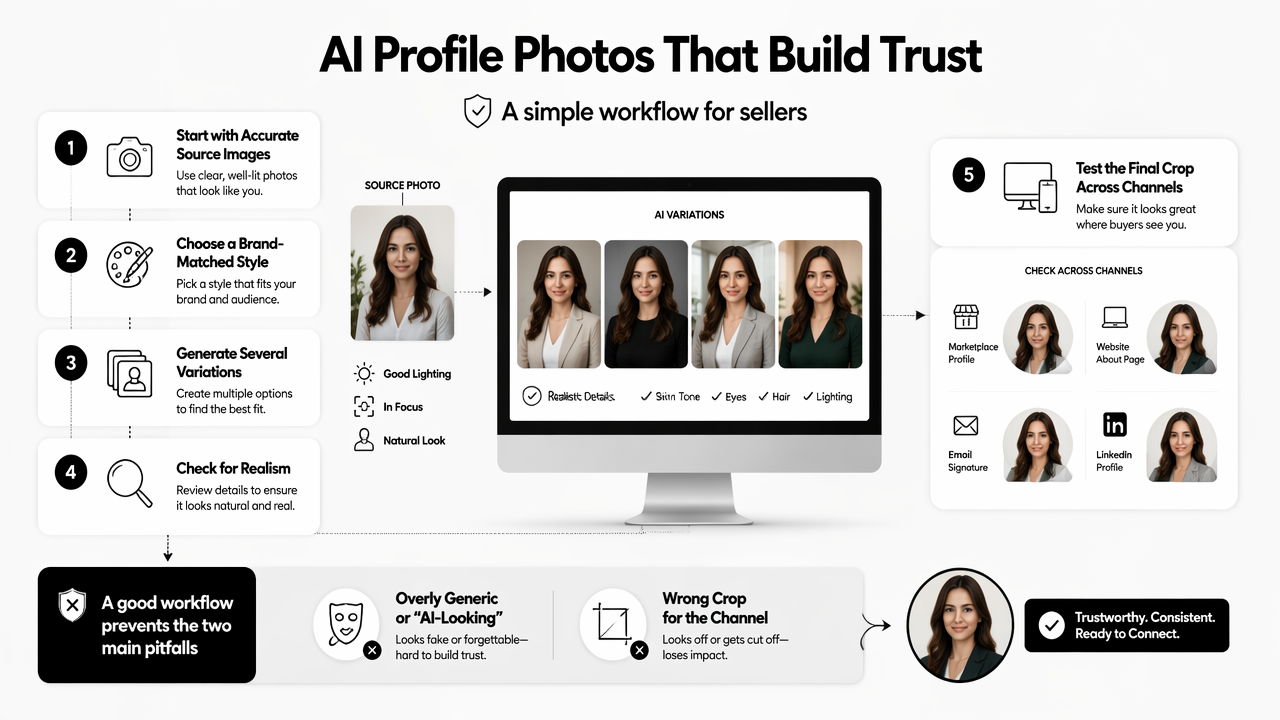
A good workflow prevents the two main risks: a portrait that looks too artificial, or a portrait that looks disconnected from the store. AI-assisted imagery is most useful when guided by clear brand rules.
Research on Artificial Intelligence for the Metaverse surveys how AI supports digital environments and virtual experiences. For ecommerce sellers, the immediate opportunity is simpler: create professional, repeatable profile visuals that fit modern selling platforms.
Five-step workflow for a seller portrait
- Select clear source photos: Use current, well-lit images with natural facial angles.
- Define the brand mood: Choose three words such as warm, premium, earthy, bold, or expert.
- Match clothing to category: Handmade goods, coaching, beauty, fashion, and home products each need different styling.
- Generate controlled variations: Create options for marketplace, storefront, and social profiles.
- Review at small size: Check whether the face, expression, and crop still read well on mobile.
After the main portrait is chosen, sellers running paid campaigns can keep creative consistent with an Instagram Facebook ad AI generator. Consistency makes the profile image, ad creative, and landing page feel like one brand system.
Quality checklist before publishing
A final seller photo should pass this short checklist:
- Face looks natural, not plastic or over-smoothed.
- Eyes, teeth, hands, earrings, glasses, and hairlines appear realistic.
- Background fits the product category and does not distract.
- Clothing color works with the logo and storefront palette.
- Image remains clear in a small circular avatar.
- The same style can extend into social posts, ads, and banners.
Avoid heavy glamour filters for categories that depend on craft, expertise, or honesty. Premium does not have to mean stiff. Friendly and clear often performs better for small businesses because it makes the seller feel reachable.
FAQ about AI seller profile photos
AI seller profile photos work best when they support trust, brand consistency, and channel-specific presentation. The main decision is not whether AI can make a polished image, but whether the final portrait matches the store's promise and buyer expectations.
Can ecommerce sellers use AI-generated profile photos on marketplaces?
Most ecommerce sellers can use AI-generated or AI-enhanced profile photos, but each marketplace may have its own image and identity policies. A safe portrait should represent the real seller or founder, avoid misleading identity cues, and match the shop's actual brand presence. Sellers should review platform rules before publishing.
Should a seller use a face photo or a logo?
A face photo usually works better for handmade goods, consulting, coaching, custom orders, and founder-led stores because buyers can connect with a person. A logo may work better for larger teams or product-first brands. Many sellers use both: a face for trust pages and a logo for packaging, ads, and icons.
How often should a seller refresh an AI profile photo?
A seller should refresh a profile photo when branding changes, product categories shift, or the current image no longer looks accurate. For active social commerce brands, a yearly update is a practical rhythm. Seasonal versions can work, but the main profile image should stay recognizable across channels.
What makes an AI profile photo look fake?
An AI portrait can look fake when skin texture is too smooth, lighting does not match the background, facial features appear uneven, or the style feels unrelated to the brand. Overly formal corporate styling can also feel false for handmade or creator-led shops. Realism should matter more than perfection.
Conclusion
A strong AI profile photo for ecommerce sellers gives buyers a human signal before product reviews, shipping policies, or ads do the heavier work. The most effective version looks real, fits the store category, and stays consistent across marketplace profiles, Shopify pages, and social commerce content.
Looktara is built for sellers who need polished personal brand imagery without a traditional shoot. For a practical next step, gather three accurate source photos, define the shop's visual mood, create profile variations, and review each crop on mobile. Then visit looktara.com to turn the chosen portrait style into a repeatable visual identity for storefronts, social profiles, and campaigns.
Generated by EarlySEO.com