
TL;DR
Solopreneurs need more than one polished headshot: the strongest set includes an authority image, friendly bio photo, sales-page portrait, newsletter avatar, and social profile image. AI tools work best when the styles match the offer, platform, and level of trust required.
A single profile photo now carries the weight of a storefront, sales rep, and first impression. An AI headshot for solopreneurs helps independent professionals create a consistent visual identity without scheduling a studio shoot for every platform. With Looktara, brand photos can support LinkedIn, landing pages, newsletters, social posts, and creator profiles from one practical image strategy.
AI headshot: a computer-generated or AI-enhanced portrait designed to look like a professional profile image while preserving a recognizable, credible appearance.
The best solopreneur headshot plan is not one perfect photo. It is a small, repeatable photo system that fits each trust moment in the business.
Table of Contents
What is an AI headshot for solopreneurs?
An AI headshot for solopreneurs is a professional-looking portrait created from uploaded photos or prompts for business use across profiles, websites, and marketing assets. It helps founders, freelancers, coaches, creators, and consultants keep a consistent image without booking repeated photo sessions.
Competitor research for this topic shows a crowded SERP, with 83,400 results and five analyzed ranking pages. Many pages focus on tool lists or generic generators, while solopreneurs need a clearer answer: which images to create, where each one belongs, and how each style supports trust.
Where AI portraits fit in a solo business
AI headshots work best when treated as brand assets, not vanity images. A LinkedIn photo should signal authority. A newsletter avatar should feel familiar. A sales-page portrait should reduce doubt near a call to action.
Solopreneurs can also connect headshots to supporting content. For example, a polished portrait can pair with a LinkedIn post image for fitness brands when a coach, trainer, or wellness founder wants a consistent professional presence.
- Best fit: LinkedIn, About pages, speaker bios, lead magnets, newsletters, ads, thumbnails, dating-adjacent personal branding.
- Less ideal: legal identity documents, news photography, medical claims, or any use where exact documentary accuracy matters.
- Main goal: recognizable, trustworthy, platform-ready imagery.
The five-image set every solopreneur should create
A solopreneur should create five core AI portraits: an authority headshot, friendly bio image, sales-page portrait, newsletter avatar, and social profile photo. Each image serves a different trust job, so repeating one photo everywhere weakens the brand system.
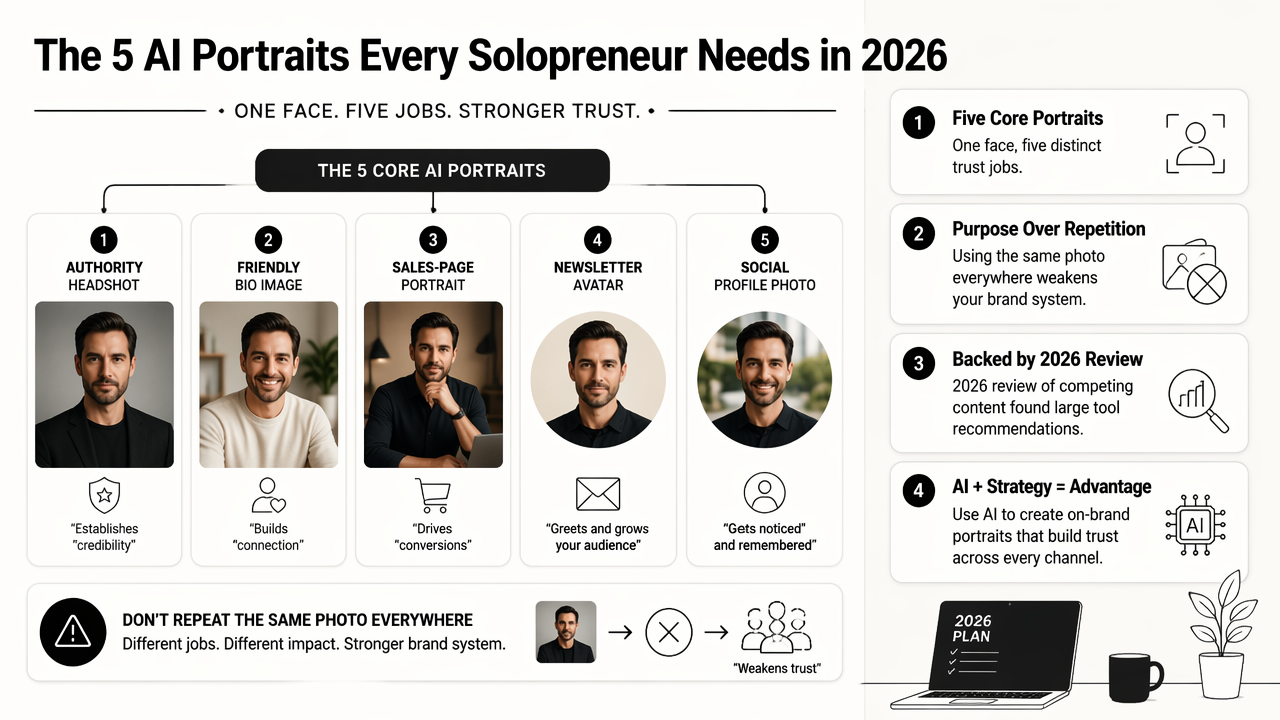
A 2026 review of competing content found that large tool roundups often compare generators but rarely map outputs to daily business use. That gap matters because a founder's headshot must work across digital design, print design, images, short-form video, and product-led pages.
Solopreneur headshot set by platform
| Image type | Best placement | Visual direction | Trust signal |
|---|---|---|---|
| Authority headshot | LinkedIn, speaker page, media bio | Clean background, sharp lighting, direct eye contact | Competence |
| Friendly bio image | About page, newsletter welcome, community profile | Warmer expression, softer setting | Approachability |
| Sales-page portrait | Landing page, offer page, checkout support | Polished outfit, brand-color background | Confidence |
| Newsletter avatar | Email header, Substack-style bio, signature | Cropped close, simple contrast | Recognition |
| Social profile photo | Instagram, TikTok, X, creator platforms | High contrast, expressive, mobile-friendly | Memorability |
The authority headshot should be the most restrained image. Neutral clothing, clear lighting, and a calm expression often outperform dramatic styling for consultants, recruiters, B2B founders, and financial professionals.
The friendly bio image can show more warmth. Coaches, therapists, creators, and educators often need this photo because trust depends on relatability as much as expertise.
The sales-page portrait should match the offer. A high-ticket consulting page needs polish; a creator course page may need energy. When a solopreneur promotes visual content, matching portraits with a social profile image generator can keep avatars and campaign images aligned.
One portrait should earn attention. The full set should make a solo business feel consistent wherever a prospect finds it.
How should AI headshot style change by offer type?
AI headshot style should change based on the offer's price, risk, and emotional tone. Higher-trust services need calmer, more polished portraits, while creator-led and lifestyle offers can use more color, movement, and personality.
Solopreneurs often make the mistake of choosing the image that looks most flattering instead of the image that fits the buying moment. A dating-style photo may feel too casual for a tax consultant. A stiff corporate portrait may feel wrong for a creator selling a fitness challenge.
Style guide by solopreneur business model
| Offer type | Headshot mood | Wardrobe | Background | Best use |
|---|---|---|---|---|
| B2B consulting | Calm, direct, credible | Blazer, structured top | Office, neutral, soft gradient | LinkedIn and sales calls |
| Coaching or therapy | Warm, steady, human | Soft textures, approachable colors | Natural light, simple room | About page and email |
| Creator products | Energetic, clear, expressive | Brand colors, casual polish | Studio color or lifestyle setting | Social profiles and launches |
| Local service business | Practical, friendly, dependable | Workwear or smart casual | Clean workplace setting | Google profile and ads |
| Dating profile refresh | Natural, relaxed, authentic | Everyday polished clothing | Outdoor or lifestyle scene | Dating apps and social bios |
Prompt checklist for consistent results
- Pick one primary brand mood, such as calm authority, warm expert, or energetic creator.
- Use the same hair, facial hair, and eyewear details across the set.
- Choose two background families, one neutral and one brand-colored.
- Generate crops for square, vertical, and horizontal placements.
- Keep one image conservative for professional platforms.
- Save the strongest mobile crop for social avatars.
Offer type also affects adjacent creative assets. A fitness entrepreneur selling a guide may need a portrait style that matches a TikTok ebook cover, while a service provider running paid campaigns may need headshots that match a Facebook ad creative.
How Looktara handles solopreneur brand images
The Looktara platform helps solopreneurs think beyond one headshot by connecting professional imagery with the broader set of visuals a solo brand needs. The useful frame is simple: create one recognizable face, then adapt the surrounding design for each channel.
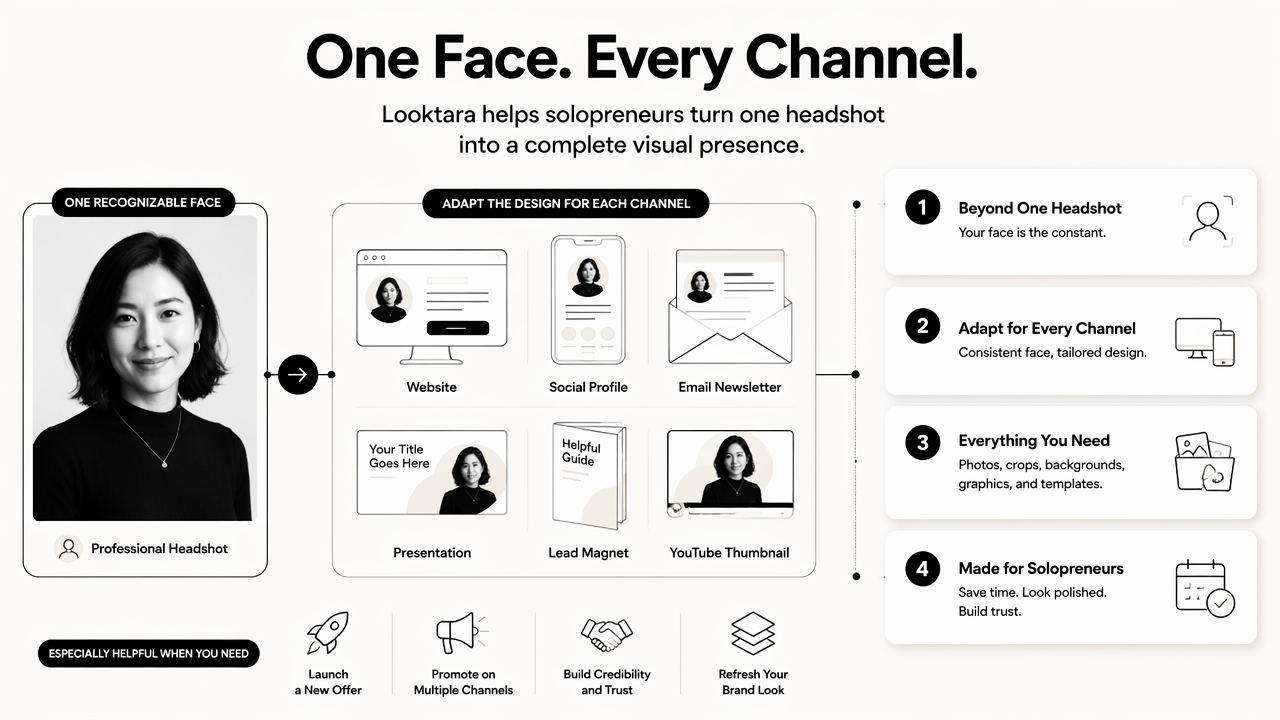
Looktara is especially relevant when a solopreneur needs profile images, campaign graphics, and content visuals to look like they came from the same brand. Instead of treating a headshot, ad, story, and cover image as separate tasks, the image system can stay consistent across touchpoints.
AI headshot options compared for solo operators
| Option | Speed | Brand consistency | Best for | Tradeoff |
|---|---|---|---|---|
| Traditional studio shoot | Slower | High with planning | Premium websites, PR, print | More scheduling and cost |
| Basic selfie editing | Fast | Low to medium | Quick profile refresh | Limited polish |
| Generic AI generator | Fast | Medium | Headshot batches | May need careful selection |
| Brand-aware AI workflow | Fast | Higher across assets | Solopreneurs with many channels | Requires clearer style direction |
A solo operator should judge tools by output control, not only realism. Useful controls include background type, clothing style, crop ratio, expression, and use case. The best workflow also supports related formats, such as social posts, stories, covers, and ads.
For short-form content, a consistent portrait can sit beside a TikTok cover design or a Google display ad layout. That matters because prospects often see a founder several times before taking action.
What to expect in 2027
AI headshots will likely become less isolated and more connected to full brand kits. Solopreneurs should expect stronger controls for repeatable faces, platform-specific crops, background matching, and campaign-ready image sets.
The practical shift is already visible: the winning output is no longer just a realistic face. The winning output is a believable person presented consistently across LinkedIn, email, landing pages, ads, and social media. For brand recall, solopreneurs can visit looktara.com when planning a unified image set.
Frequently asked questions about AI headshots
A useful FAQ answers the concerns solopreneurs have before publishing AI-generated portraits, especially around realism, trust, platform fit, and brand consistency. According to the Wikipedia definition of FAQ, a FAQ is a curated list of questions and answers addressing important or commonly misunderstood parts of a topic.
Are AI headshots acceptable for LinkedIn?
AI headshots are acceptable for LinkedIn when the image looks realistic, recognizable, and professional. The photo should not misrepresent age, identity, credentials, or work setting. A clean crop, direct eye contact, and simple background usually fit LinkedIn better than highly stylized fashion or fantasy images.
How many AI headshots should a solopreneur generate?
A solopreneur should generate enough options to select five final images for different business moments. The final set should include an authority headshot, friendly bio image, sales-page portrait, newsletter avatar, and social profile photo. More variations help, but publishing too many unrelated styles can make the brand feel scattered.
What makes an AI portrait look trustworthy?
A trustworthy AI portrait keeps facial features consistent, uses natural lighting, and avoids over-smoothed skin or unrealistic clothing. The expression should match the offer. Serious advisory services need calm confidence, while creator-led products can show more energy and warmth.
Can one AI headshot work across every platform?
One headshot can work as a temporary fix, but it rarely works best everywhere. LinkedIn, sales pages, newsletters, and social apps have different crops and emotional contexts. A small image set gives a solopreneur more control while keeping the same recognizable identity.
What should happen after choosing the final images?
After choosing the final images, a solopreneur should update the highest-visibility profiles first: LinkedIn, website bio, newsletter, booking page, and primary social account. Then, the same visual direction should be carried into posts, covers, ads, and launch graphics so the brand feels familiar across channels.
Conclusion
A strong AI headshot for solopreneurs is not just a nicer profile photo. It is the starting point for a five-image brand set that supports authority, warmth, sales, recognition, and social visibility.
The next step is practical: choose the offer type, define the brand mood, generate the five core portraits, and update the most visible profiles first. For solopreneurs building a consistent image system across headshots, posts, ads, and covers, Looktara gives that planning process a clearer creative home.
Generated by EarlySEO.com