
TL;DR
Career coaches need headshots that signal both competence and approachability, not stiff corporate polish or casual influencer energy. The best AI workflow defines the coaching niche, controls expression, wardrobe, background, and crop, then adapts the final image for LinkedIn, booking pages, webinar bios, and social content.
A strong coaching portrait has to earn trust before a discovery call ever happens. An AI headshot for career coaches should communicate warm authority: credible enough for LinkedIn and executive audiences, approachable enough for people considering a career change. AI headshot: a machine-generated or AI-enhanced portrait created from uploaded photos, then styled to fit a professional use case. Tools such as Looktara can help career professionals create consistent visual assets without booking a full studio session. Coaches who also market on social channels can pair headshots with branded profile visuals, such as a professional Instagram profile picture generator, to keep their presence recognizable across platforms.
Table of Contents
What is an AI headshot for career coaches?
An AI headshot for career coaches is a professional portrait generated or enhanced with artificial intelligence for coaching profiles, LinkedIn pages, webinar bios, websites, and booking pages. The goal is not just polish; the image should show credibility, empathy, and niche fit so prospects can picture a productive coaching conversation.
SERP analysis found 191 results around this topic, but many pages focus on generic free generators or broad reviews of TryItOn.AI, Secta, Aragon.AI, HeadshotPro, Aragon.AI, and Canva. Career coaches need a narrower standard because the photo is part of a trust funnel, not just a nice avatar.
Key insight: a coach headshot should feel like the first 3 seconds of a good consultation: calm, clear, and human.
Core terms coaches should define before generating images
- Warm authority: a visual style that blends expertise with approachability.
- Commercial-safe portrait: an image suitable for business pages, ads, lead magnets, and event bios.
- Brand consistency: repeated use of color, lighting, crop, and expression across client-facing channels.
- Profile intent: the specific action the image supports, such as booking a call, joining a webinar, or trusting a LinkedIn post.
LinkedIn is a business and employment-oriented social networking service used for professional networking and career development, so the headshot should support credibility rather than pure personality. Dating-app style charm, influencer styling, and boardroom severity all miss the middle ground most coaches need.
Why does warm authority matter for coaches?
Warm authority matters because career coaching is a high-trust service sold through personal credibility, repeated visibility, and emotional safety. A client may be dealing with layoffs, promotion pressure, burnout, or a career shift, so a headshot must signal competence without making the coach feel distant.
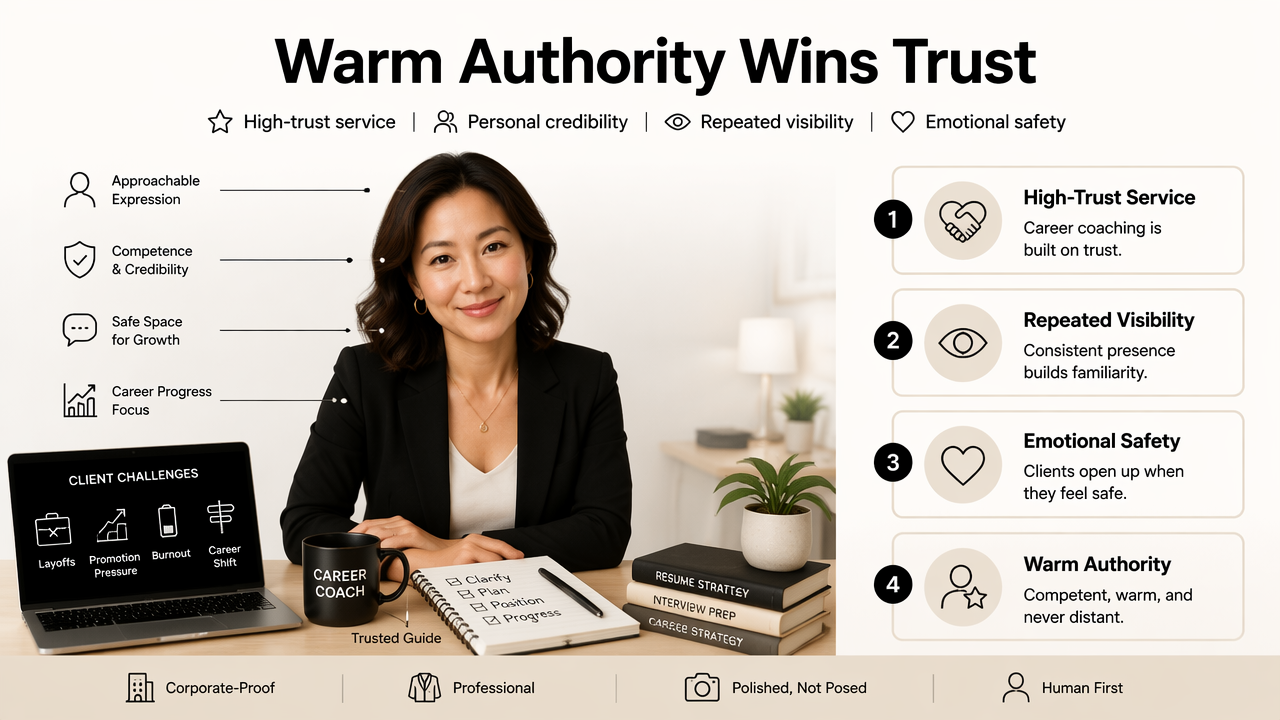
A corporate lawyer can use a stern portrait. A lifestyle creator can use a playful one. A career coach usually needs a blended signal: confident eyes, relaxed mouth, clean styling, and a background that does not compete with the face.
SERP competitors average about 2,540 words, yet the common gap is practical positioning for coaches. The image needs to work on LinkedIn, website headers, Calendly-style booking pages, webinar speaker cards, podcast guest pages, and paid social campaigns.
Best image signals by coaching channel
| Channel | Prospect expectation | Best headshot signal |
|---|---|---|
| LinkedIn profile | Career credibility and clear expertise | Natural smile, sharp crop, neutral or soft office background |
| Coaching website | Trust before booking | Open expression, brand colors, calm lighting |
| Booking page | Low-friction confidence | Friendly face, direct eye contact, uncluttered frame |
| Webinar bio | Expert presenter energy | Slightly more polished outfit, clean contrast |
| Social ads | Fast recognition | Consistent crop and color system |
Coaches running paid workshops or niche programs also need creative assets beyond the portrait. A headshot can anchor campaign visuals, while a page such as the Instagram and Facebook ad AI generator shows how consistent creative can support a clearer offer.
Warm authority also helps avoid a common mismatch: a coach who teaches modern job search strategy but appears visually outdated. In 2026, prospects compare a coach's profile against polished creators, recruiters, consultants, and founder-led brands in the same feed.
How should coaches style an AI headshot?
Coaches should style an AI headshot by defining the audience, choosing a trustworthy expression, selecting niche-appropriate wardrobe, using a clean background, and testing the final crop on every channel where the portrait will appear. The best image looks professional at full size and still recognizable as a small circular avatar.
A good prompt or style brief should be specific. Instead of asking for a professional headshot, a career coach might specify executive career coach, soft daylight, navy blazer, calm smile, modern office background, chest-up crop, realistic skin texture, and LinkedIn-ready composition.
Five-step styling workflow
- Name the coaching niche. Executive transition, resume coaching, interview prep, leadership coaching, and creator career strategy each need a slightly different image.
- Choose one emotional signal. Calm confidence, encouraging clarity, or strategic authority usually works better than a broad smile alone.
- Match wardrobe to client level. Blazers suit executive coaching; smart knitwear can work for creative career coaching; loud patterns usually distract.
- Keep the background quiet. Soft office, neutral studio, warm bookshelf, or blurred workspace settings keep attention on the face.
- Check small-size readability. LinkedIn comments, podcast pages, and event cards often shrink the headshot, so the face must remain clear.
For coaches who publish short-form content, the headshot can become the anchor image in recurring templates. The Looktara platform is useful when a coach needs a consistent face-forward style across profile photos, slides, and promotional designs rather than a one-off image.
Style choices that usually work best
| Element | Strong choice | Why it works |
|---|---|---|
| Expression | Soft smile with direct eye contact | Balances expertise and safety |
| Wardrobe | Solid blazer, blouse, shirt, or refined knit | Reads clearly in small crops |
| Background | Warm neutral, soft office, muted bookshelf | Adds context without clutter |
| Lighting | Even daylight or studio-soft lighting | Reduces harsh shadows and keeps skin realistic |
| Crop | Head-and-shoulders or mid-chest | Works for LinkedIn, bios, and booking pages |
A coach building webinars or group programs can adapt the same portrait into promotional sequences. Related assets such as an Instagram story AI generator can keep event announcements visually aligned with the headshot.
Looking toward 2027, the trend is likely to shift from single headshots to image systems. Coaches will need a primary portrait, a speaking bio version, a social avatar, and campaign graphics that all feel related. Research by Untung Rahardja in the International Journal Research on Metaverse examined data-driven skill profiling in virtual contexts, which reflects the broader move toward profile signals being interpreted across digital environments: 2025 study.
What mistakes make coach portraits feel off?
Coach portraits feel off when the image becomes too corporate, too casual, visually inconsistent, or visibly artificial. The most common problem is not AI itself; it is a weak creative brief that fails to define the coach's audience, promise, and channel context.
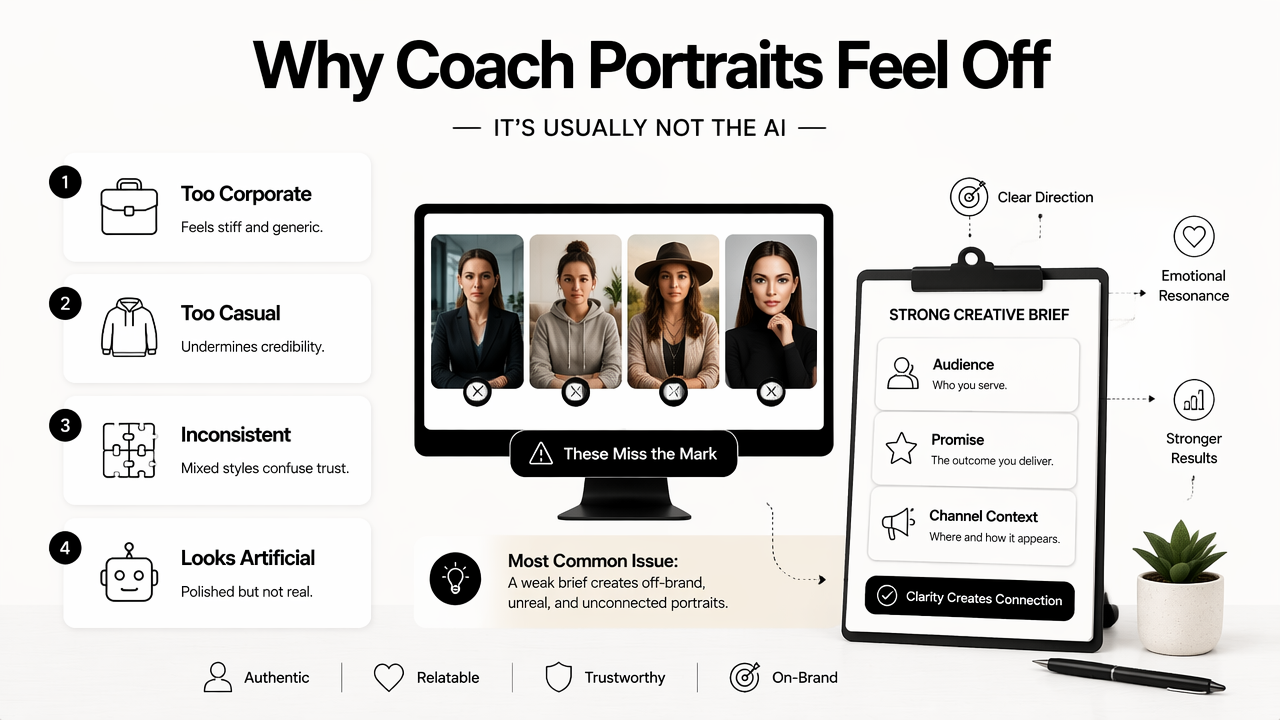
Some AI images look technically polished but emotionally wrong. A frozen smile, plastic skin, extra-sharp suit, or luxury background can make a coach feel less accessible. On the other side, selfies, gym lighting, cropped event photos, and over-filtered social images can weaken premium positioning.
Key insight: career coaching is personal, but the headshot should not feel private. It should feel client-ready.
Mistake checklist before publishing
- Too corporate: crossed arms, severe expression, dark boardroom, heavy retouching.
- Too casual: hoodie, car selfie angle, messy room, vacation background.
- Too generic: stock-photo pose, no niche signal, no memorable color cue.
- Too artificial: waxy skin, mismatched earrings, distorted hands, odd teeth, glassy eyes.
- Too inconsistent: one tone on LinkedIn, another on the website, another in webinar graphics.
- Too crowded: busy bookshelf, strong patterns, visible logos, bright objects near the face.
Quality control should happen at 100 percent zoom and avatar size. The coach should inspect facial symmetry, hairline edges, teeth, hands, jewelry, collar shape, and background objects. If the image would distract a skeptical hiring manager or an executive client, it is not ready.
How Looktara handles brand-ready coach imagery
Looktara fits best when a coach wants the portrait to become part of a broader personal brand system. A polished headshot can support website sections, lead magnets, social launches, and speaking pages when the same visual direction carries across formats.
Coaches with audience-building funnels can also connect portrait style to campaign creative. For example, a workshop promotion may use a headshot next to a promise-driven graphic, while a display campaign can align with layouts from a Google display ad AI generator. For direct brand recall, head to looktara.com when planning a consistent set of profile and promotional images.
FAQ about coach headshots
Career coaches should treat headshots as conversion assets, not simple profile decorations. The right image helps prospects recognize the coach, understand the service tone, and feel safe enough to take the next step.
Can AI headshots replace a professional photographer for career coaches?
AI headshots can replace a photographer for many profile, social, webinar, and early-stage website needs when the output looks realistic and brand-aligned. A photographer still makes sense for premium brand shoots, press kits, team pages, or highly specific art direction. Many coaches can start with AI, then upgrade once positioning and offers are proven.
What should a career coach wear in an AI headshot?
A career coach should wear clothing that matches the client segment being served. Executive coaches usually benefit from blazers, structured tops, and muted colors. Coaches serving creatives, freelancers, or early-career professionals can look polished in softer layers. Solid colors work better than busy prints because avatars often appear small on LinkedIn and booking pages.
How many headshot versions should a coach create?
A coach should create at least three usable versions: one LinkedIn avatar, one website or speaker bio portrait, and one warmer social profile image. A fourth campaign-ready version can help with webinars, course launches, and paid promotions. Visual consistency matters more than having many unrelated portraits.
Should coach headshots be used in marketing graphics?
Coach headshots often work well in marketing graphics because the business is tied to personal trust. The same portrait can appear on workshop ads, lead magnet covers, and event announcements. For launch materials, a pitch deck slide AI generator or a TikTok cover AI generator can extend the same visual identity into campaign assets.
Conclusion
A polished AI headshot for career coaches should make a simple promise before any copy is read: this coach is credible, approachable, and prepared to help. The strongest results come from a clear niche brief, warm expression, clean wardrobe, quiet background, and channel-specific crops.
The next step is practical: choose one primary audience, write a short visual brief, generate several realistic options, then test the strongest image on LinkedIn, the website, and the booking page before expanding into ads or webinar graphics. For coaches building a broader personal brand system, Looktara can help connect the headshot with matching promotional visuals. Visit looktara.com to plan a consistent set of career-ready images.
Generated by EarlySEO.com